بيان “أجفند”،وجامعة الدول العربية بمناسبة اليوم العالمي لمكافحة عمل الأطفال
كتب- إبراهيم عوف
بمناسبة اليوم العالمي لمكافحة عمل الأطفال، الذي يوافق الثاني عـشر من يونيو/حزيران من كل عام، نؤكد نحن الأمانة العامة لجامعة الدول العربية، ومنظمة العمل العربية، والمجلس العربي للطفولة والتنمية، وبرنامج الخليج العربي للتنمية “أجفند”، أن مكافحة عمل الأطفال يمثل التزاما أخلاقيا وتنمويا راسخا واختبارًا حقيقيًا لجدية السياسات التنموية، وعدالة النظم الاجتماعية، وقدرة المجتمعات على صون الطفولة في زمن تتسع فيه دوائر الفقر والنزاع والهشاشة، كما نجدد التزامنا الراسخ بتكثيف الجهود الرامية إلى القضاء على عمل الأطفال بجميع أشكاله لا سيما أسوأ أشكاله، وتعزيز حماية حقوق الطفل وفقاً للمواثيق الدولية ذات الصلة.
وفي عام 2026، يكتسب إحياء هذه المناسبة أهمية خاصة، في ظل تنامي التحديات التي تعيق تحقيق الهدف العالمي المتمثل في القضاء على عمل الأطفال، والمنصوص عليه في الغاية (8.7) من أهداف التنمية المستدامة، وبالنظر إلى التقديرات الدولية التي تشير إلى أن نحو 138 مليون طفل لا يزالون منخرطين في العمل، من بينهم 54 مليون طفل في أعمال خطرة تهدد صحتهم وسلامتهم ونموهم. ويأتي ذلك في سياق تتداخل فيه عوامل الفقر، والنزاعات، والحروب، والتغيرات المناخية، والأزمات الاقتصادية والاجتماعية.
وفي المنطقة العربية، تتزايد المخاوف من اتساع ظاهرة عمل الأطفال مع تصاعد الأزمات المركّبة التي تلقي بظلالها على الأسر والمجتمعات، في ظل الحرب الإقليمية القائمة في الشـرق الأوسط، ناهيك عن الحروب والنزاعات الممتدة، وما سببته من نزوح ولجوء، وتدهور في الأوضاع الاقتصادية، واتساع في دائرة الفقر متعدد الأبعاد، وتنامٍ في الاقتصاد غير المنظم، وضعف في جودة التعليم ونظم الحماية الاجتماعية، وتراجع في فرص العمل اللائق. وقد تدفع هذه العوامل أعدادًا متزايدة من الأطفال إلى سوق العمل في سن مبكرة، وفي أنماط عمل خطرة، في ظل قصور آليات الحماية والرصد والإحالة وإعادة الإدماج، وهو ما يشكل انتهاكًا صريحًا لحقوق الطفل، ومبادئ العدالة الاجتماعية والعمل اللائق.
وفي ظل التحولات الرقمية المتسارعة، لم تعد مخاطر عمل الأطفال تقتصـر على أشكاله التقليدية، بل امتدت إلى الفضاء الرقمي الذي أفرز أنماطًا جديدة وأكثر تعقيدًا من الاستغلال الاقتصادي والانتهاكات عبر المنصات والتطبيقات الإلكترونية. ومن ثمّ، فإن الجهود الرامية إلى القضاء على عمل الأطفال لا تكتمل دون التصدي للمخاطر المتزايدة التي يفرضها هذا الفضاء، بما يستوجب تعزيز التدابير والسياسات الهادفة إلى بناء بيئة رقمية آمنة تحترم حقوق الأطفال وتحميهم من جميع أشكال الاستغلال التجاري والاقتصادي، انسجامًا مع الالتزامات الدولية الرامية إلى القضاء على عمل الأطفال، وضمان تمتع كل طفل بطفولة آمنة وكريمة، خالية من كافة أشكال الاستغلال والانتهاك.
وفي ظل هذه التحديات، تبقى معاناة الأطفال في فلسطين المحتلة، ولا سيما في قطاع غزة، جراء حرب الإبادة التي يمارسها الاحتلال من أقسـى الشواهد الحاضرة في التاريخ على الانتهاك الجسيم لحقوق الأطفال، وما رافقها من حصار ونزوح وحرمان من الغذاء والمأوى والتعليم والرعاية الصحية في مشهد غير مسبوق لأكبر النكسات الإنسانية، فأطفال فلسطين يواجهون تهديدًا يوميًا لحقهم في الحياة، فضلاً عن فقدان الحماية الاجتماعية، والانقطاع عن التعليم، والتعرض للاستغلال والأعمال الخطرة، الأمر الذي يستدعي تحركًا دوليًا عاجلًا وفعّالًا لضمان حمايتهم، ووقف الانتهاكات بحقهم، وصون حقوقهم المشـروعة بموجب القانون الدولي الإنساني واتفاقية حقوق الطفل.
وإذ نستحضـر ما خلص إليه المؤتمر العربي رفيع المستوى حول “عمل الأطفال وسياسات الحماية الاجتماعية في الدول العربية” الذي عقدناه – نحن الشـركاء – في القاهرة (ديسمبر/كانون الأول 2025)، فإننا نؤكد أن القضاء على عمل الأطفال يستوجب تبني مقاربات شاملة ومتكاملة تعالج أسبابها الجذرية، وترتكز على سياسات حماية اجتماعية شاملة ومستجيبة للأزمات، ولاسيما في المجتمعات المتأثرة بالحروب والكوارث والأزمات.
كما نُشيد بمخرجات القمة العالمية الثانية للتنمية الاجتماعية (الدوحة، 2025)، ولاسيما إعلان الدوحة السياسي، وبمخرجات المؤتمر العالمي السادس للقضاء على عمل الأطفال (مراكش، 2026)، ولا سيما إطار مراكش العالمي للعمل ضد عمل الأطفال، كمحطتين بارزتين في مسار الجهود الدولية الرامية إلى تسـريع القضاء على عمل الأطفال وتعزيز العدالة الاجتماعية، حيث أكّدت هذه المخرجات أن القضاء على عمل الأطفال التزام أخلاقي وتنموي لا يقبل التأجيل، وأنه لا يجوز أن يترك الأطفال رهائن للفقر أو النزاعات أو الاختلالات الهيكلية.
وفي هذا اليوم، نؤكد على الأولويات الاستراتيجية التالية:
• توسيع نظم الحماية الاجتماعية الشاملة والمستجيبة للصدمات، بما يحول دون لجوء الأسر إلى دفع الأطفال للعمل كآلية للبقاء والتكيف مع الأزمات.
• ضمان الحماية المتكاملة للأطفال عبر تحسين جودة التعليم وإتاحته للجميع، والحد من التسرب المدرسي، ودمج الخدمات الاجتماعية والصحية.
• تعزيز العمل اللائق للبالغين والشباب بما يضمن دخلًا كريمًا للأسر، يحد من الضغوط الاقتصادية التي تدفع الأطفال إلى سوق العمل.
• تفعيل وإنفاذ التشـريعات الوطنية المتسقة مع المعايير العربية والدولية، ولا سيما ما يتعلق بالحد الأدنى لسن العمل وحظر أسوأ أشكال عمل الأطفال، وكذلك توفير أطر قانونية تحقق الحماية الرقمية وتضمن استخدام آمن ومسؤول للتكنولوجيا.
• الاستثمار في البيانات والابتكار لتطوير نظم رصد فعالة قائمة على الأدلة، بما يدعم التدخل المبكر.
• تعزيز الشـراكات متعددة الأطراف بين الحكومات والشـركاء الاجتماعيين والمجتمع المدني، والقطاع الخاص.
• تعميق التعاون الإقليمي والدولي لتنسيق الجهود وتسـريع وتيرة التقدم نحو القضاء على عمل الأطفال.
ختاماً، ومواصلة لجهودنا في هذا المجال، نؤكد أن القضاء على عمل الأطفال يعد شرطاً أساسياً لتحقيق العدالة الاجتماعية والتنمية المستدامة، ونُجدد التزامنا بالعمل المشترك مع الدول الأعضاء في جامعة الدول العربية، وترجمة هذا الالتزام إلى سياسات فعّالة تضمن لكل طفل حقه في طفولة آمنة، وتعليم جيد، وحياة كريمة.فلنعمل معاً من أجل إنهاء عمل الأطفال؛ فأطفالنا يستحقون مستقبلًا أفضل يليق بأحلامهم.
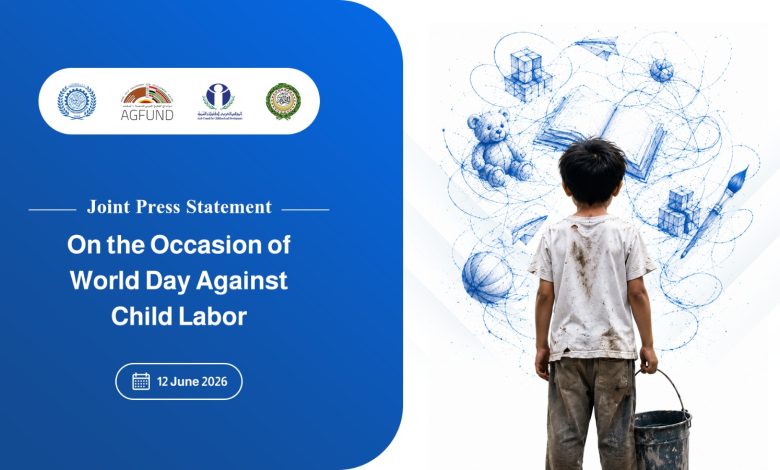
Joint press statement
On the Occasion of
On the occasion of the World Day Against Child Labor, observed annually on 12 June, we, the General Secretariat of the League of Arab States, the Arab Labor Organization, the Arab Council for Childhood and Development, and the Arab Gulf Programme for Development (AGFUND), reaffirm that the elimination of child labor is both a moral imperative and a development priority. It is a true measure of the effectiveness of development policies, the fairness of social systems, and the capacity of societies to safeguard childhood in an era marked by growing poverty, conflict, and vulnerability. We further reaffirm our unwavering commitment to intensifying efforts to eliminate child labor in all its forms, particularly its worst forms, and to advancing the protection and promotion of children’s rights in accordance with relevant international standards and conventions.
The observance of this year’s World Day Against Child Labor comes at a critical moment, as growing challenges continue to impede progress towards achieving the global target of ending child labor as enshrined in Sustainable Development Goal Target 8.7. Recent international estimates indicate that approximately 138 million children remain engaged in child labor worldwide, including 54 million children involved in hazardous work that threatens their health, safety, and development. These alarming figures reflect the compounded effects of poverty, conflict, climate change, economic instability, and social crises, all of which continue to undermine efforts to protect children and secure their future.
Across the Arab region, concerns over the persistence and expansion of child labor are intensifying amid increasingly complex and overlapping crises affecting families and communities. The ongoing regional conflict in the Middle East, protracted wars and armed conflicts, displacement and refugee movements, deteriorating economic conditions, rising multidimensional poverty, the expansion of informal employment, weakened education systems and social protection mechanisms, and declining access to decent work have all heightened children’s vulnerability to exploitation. These factors continue to drive increasing numbers of children into the labor market at an early age, often in hazardous and exploitative conditions. Such realities, compounded by shortcomings in protection, monitoring, referral, and reintegration mechanisms, constitute serious violations of children’s rights and undermine the principles of social justice and decent work.
In the context of rapid digital transformation, the risks associated with child labor are no longer confined to traditional sectors and occupations. Emerging digital environments have created new and increasingly complex forms of economic exploitation and abuse through online platforms, applications, and digital services. Efforts to eliminate child labor must therefore address these evolving risks by strengthening policies and safeguards that foster a safe and child-centered digital environment, one that respects children’s rights and protects them from all forms of commercial exploitation, and economic abuse. Such efforts are essential to fulfilling international commitments aimed at eradicating child labor and ensuring that every child enjoys a safe, secure, and dignified childhood.
Against this challenging regional backdrop, the plight of children in the Occupied Palestinian Territory, particularly in the Gaza Strip, remains among the most distressing examples of grave violations of children’s rights in our time. The devastating consequences of the ongoing war, including displacement, deprivation of food, shelter, education, and healthcare, have created an unprecedented humanitarian catastrophe for children. Palestinian children face daily threats to their right to life and development, compounded by the loss of social protection, disruption of education, and increased exposure to exploitation and hazardous labor. This situation calls for urgent and effective international action to ensure their protection, end violations against them, and uphold their rights in accordance with international humanitarian law and the Convention on the Rights of the Child.
Recalling the conclusions of the High-Level Arab Conference on Child Labor and Social Protection Policies in the Arab States, convened by the partner organizations in Cairo in December 2025, we reaffirm that the elimination of child labor requires comprehensive and integrated approaches that address its root causes. Such approaches must be anchored in inclusive, resilient, and crisis-responsive social protection systems, particularly in communities affected by conflict, displacement, disasters, and other emergencies.
We further commend the outcomes of the Second World Summit for Social Development held in Doha in 2025, particularly the Doha Political Declaration, as well as the outcomes of the Sixth Global Conference on the Elimination of Child Labor held in Marrakech in 2026, notably the Marrakech Framework for Action. These important milestones have reinforced the global commitment to accelerating the elimination of child labor and advancing social justice. They underscore that ending child labor is an urgent moral and developmental obligation that cannot be deferred, and that no child should be left vulnerable to poverty, conflict, or structural inequalities.
On this occasion, we reaffirm the following strategic priorities:
• Expanding comprehensive and shock-responsive social protection systems to prevent families from resorting to child labor as a negative coping mechanism in times of crisis and economic hardship.
• Ensuring integrated protection for children through improving access to quality education for all, reducing school dropout rates, and strengthening linkages between social, health, and educational services.
• Promoting decent work opportunities for adults and young people to ensure adequate household incomes and reduce the economic pressures that drive children into the labor market.
• Strengthening the implementation and enforcement of national legislation in line with Arab and international standards, particularly with regard to minimum age requirements for employment and the prohibition of the worst forms of child labor, while establishing legal and regulatory frameworks that promote digital safety and the responsible use of technology.
• Investing in data, evidence, and innovation to strengthen monitoring systems and support early, evidence-based interventions.
• Enhancing multi-stakeholder partnerships among governments, workers’ and employers’ organizations, civil society, and the private sector.
• Deepening regional and international cooperation to improve coordination, mobilize collective action, and accelerate progress towards the elimination of child labor.
In conclusion, we reaffirm that the elimination of child labor is indispensable to the achievement of social justice and Sustainable Development. We remain committed to working in partnership with Member States of the League of Arab States and all relevant stakeholders to advance integrated and evidence-based policies that address root causes of child labor and ensure that every child enjoys the right to protection, quality education, and a life of dignity.
Let us join forces to end child labor. Our children deserve a future that reflects their aspirations, nurtures their talents, and enables them to thrive.